
 Duane Beckett
Some Revolutionary War naval fights sound less like dusty history and more like a lost miniseries. From small ships to desperate crews and improvised weapons, these five battles were fought on the water during the American Revolution, but most have been jettisoned from history in favor of the bigger headline battles. Yet some of these forgotten Revolutionary War naval battles have truly wild stories that everyone should know.
Turtle Gut Inlet: Nancy Blown Up Under the British
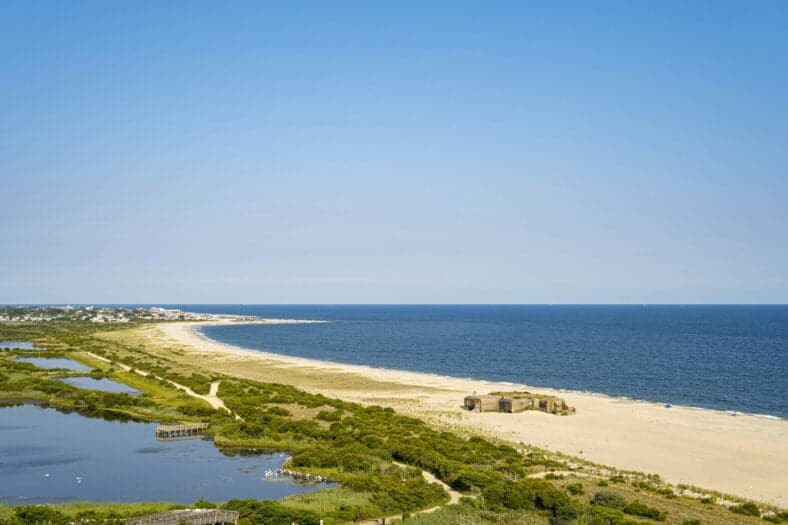
Turtle Gut Inlet turned into a wild trap on June 29, 1776, near Cape May, New Jersey. The brig Nancy was carrying munitions for the Continental Army when British warships chased her toward shore. Captain John Barry came in with Lexington and Wasp to help unload the cargo while Nancy sat under fire.
Wildwood Crest Historical Society states that Barry’s men saved much of the powder, then packed about 50 pounds of gunpowder into the mainsail as a fuse to the powder left below deck. It was a brutal move, as when British sailors boarded, the Nancy exploded. The blast ended the fight, and the salvaged powder still reached American hands.
The Franklin’s Hook-and-Lance Brawl off Nantasket: HMS Hope

James Mugford’s fight off Nantasket in May 1776 deserves far more attention than it gets. Franklin captured the British transport Hope on May 17, taking a prize packed with military supplies, including 1,500 barrels of gunpowder and 1,000 carbines, according to the National Park Service.
Two days later, British boats came after Franklin near Deer Island. NPS reported that Mugford’s crew was attacked by “twelve or thirteen” boats, and the Americans still beat them back.
The U.S. Naval Institute describes an ugly close fight, with British soldiers climbing the hull and Americans using red-hot shot and blades to stop them. Mugford died, but Franklin didn’t fall.
The Turtle’s First Submarine Attack in New York Harbor
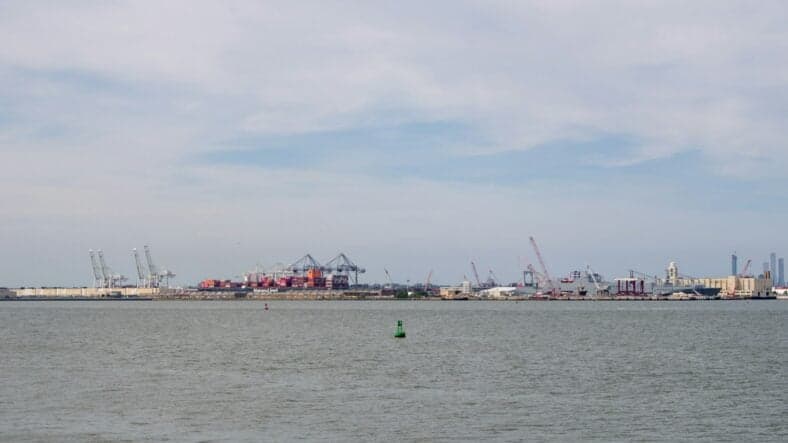
David Bushnell’s Turtle was basically 1776 tech weirdness in the best possible way. On September 6, Sergeant Ezra Lee used the one-man submersible in New York Harbor against HMS Eagle, the British flagship.
According to the Massachusetts Historical Society, the Turtle was designed for one operator, moved with propellers, and carried a bomb meant to be attached under a ship with a hand auger. Lee got under Eagle, but the drill hit metal instead of wood, so the explosive would not attach. The ship didn’t sink.
However, I love this story because it feels like somebody tried to build Iron Man tech out of a barrel, a crank, and sheer nerve. Today, it’s just one of many forgotten Revolutionary War naval battles.
Cruizer’s Gauntlet on the Cape Fear River

HMS Cruizer ran into a bad situation on the Cape Fear River in North Carolina on January 27 and 28, 1776. This was not a clean, open-water duel. It was a river fight, with Patriots on both banks and a Royal Navy vessel stuck pushing through a narrow danger zone.
Information from Carolana shows Capt. Francis Parry commanded Cruizer with 60 men and eight guns, while Col. William Purviance’s militia fired from shore. The site states that rifle fire from both sides drove a British raiding party back onto the ship, and the militia kept firing until Cruizer withdrew downriver.
That’s the wild part. A warship got boxed in by geography and determined locals.
Machias and the Capture of HMS Margaretta

Machias was a town fight that turned into a naval battle on June 11 and 12, 1775. Local Patriots in what is now Maine went after HMS Margaretta, a British armed schooner commanded by James Moore.
The U.S. Naval Institute reported that Jeremiah O’Brien and 35 local volunteers took Unity out after Margaretta with 20 fowling pieces, a small cannon, 30 hay forks, axes, a little food, and water.
As the Naval Institute put it, the fight ended with Unity lashed alongside Margaretta, grenades thrown, pitchfork-armed boarders, and Moore fatally shot before the British surrendered. Basically, a town built its own navy for a day and won.