
 Duane Beckett
The Cold War was more than missiles, spy planes, and tense TV speeches. It also led to shocking government experiments that sound hard to believe. Despite being framed as defense research, they were often conducted on unwitting subjects and even carried out citywide without anyone knowing. These are some of the most shocking Cold War military experiments that turned out to be true.
Project MK-Ultra, the CIA Mind-Control Program

Project MK-Ultra was a covert CIA program focused on drugs, interrogation, behavior control, and the possibility of influencing the human mind. It began in the early 1950s, and one major part of the program involved unwitting LSD testing. It was halted in 1963 after an inspector general review.
The U.S. Senate Select Committee found that MK-Ultra involved 149 subprojects, 185 nongovernment researchers and assistants, and work tied to colleges, hospitals, clinics, research groups, companies, and penal institutions.
According to the Senate record, some unwitting drug testing happened in safe houses in San Francisco and New York City.
Desert Rock Nuclear Tests, Marching Troops Into Atomic Blasts
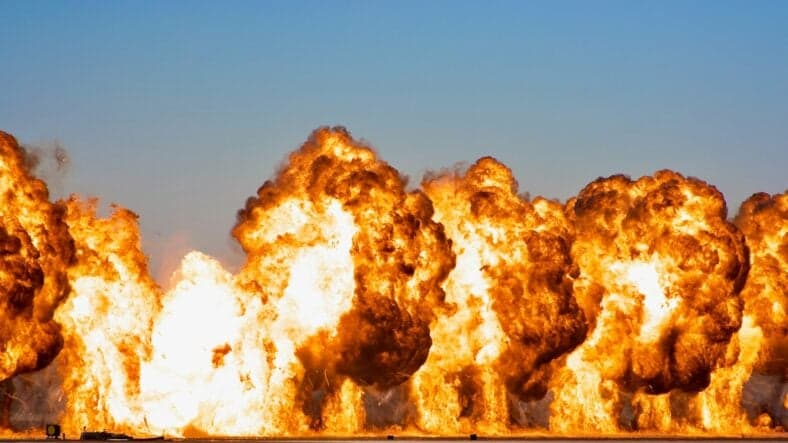
U.S. service members were sent to Camp Desert Rock at the Nevada Test Site starting in 1951, where troops witnessed atomic detonations as part of Cold War nuclear battlefield training.
Information from the National Nuclear Security Administration’s Nevada history material shows that thousands of military personnel from all four U.S. services were ordered to serve there. After some blasts, troops were marched or bused closer to ground zero to inspect the effects on military equipment.
I’ve seen enough old Atomic Age footage to know the era had a strange confidence about radiation. Still, this is hard to process. Soldiers were placed near nuclear explosions so the military could better understand how people and equipment might perform after an atomic attack. Human bodies were part of the lesson.
Project Iceworm and Camp Century, Nukes Under the Greenland Ice

Project Iceworm was a U.S. Army plan to place nuclear missiles under Greenland’s ice sheet, using Camp Century as the public-facing Arctic research base.
The Atomic Heritage Foundation states that Camp Century construction began in 1959 and that the site was officially presented as a scientific project, even though its deeper purpose was testing a military operation involving nuclear missiles.
The plan called for vast tunnel networks, hundreds of missiles, and launch control centers under the ice. The shocking twist was practical and political. The ice was unstable, Denmark had not clearly approved nuclear missiles there, and the whole idea was canceled before missiles were deployed.
CIA’s Acoustic Kitty, the Wired Spy Cat

The CIA’s Acoustic Kitty project tried to turn a cat into a mobile listening device. According to the CIA, the agency began exploring the idea in 1964, wiring a cat with a microphone and transmitter so it could move near conversations between foreign agents and Soviet handlers without drawing attention.
A microphone went in one ear, a transmitter was placed under the skin, and an antenna was woven into the cat’s fur.
The technology worked. The cat did not. The CIA states that the animal had “a mind of its own,” went where it wanted, and the program ended in 1967 without being used operationally. As spy gadgets go, it’s unforgettable. As an experiment on an animal, it’s deeply unsettling, fitting perfectly into our Cold War military experiments list.
Open-Air Chemical and Biological Dispersion Tests on U.S. Cities

Open-air chemical and biological dispersion tests were Cold War trials where U.S. officials released tracers, stimulants, and in some cases live agents to study how chemical or biological attacks might spread.
Arms Control Today reported that the Defense Department released information in 2002 on 27 chemical and biological weapons tests conducted from 1962 to 1973, including land-based tests and some civilian exposure to simulated agents.
The National Academies also states that the U.S. Army released zinc cadmium sulfide from airplanes, rooftops, and moving vehicles in 33 urban and rural areas to study biological weapon dispersal.
Locations included cities in the United States and Canada. The agents were described as low-risk, but that doesn’t erase the shock value.