
 Duane Beckett
Cold War bunkers were built across the world for survival, secrecy, and worst-case thinking. Amazingly, some hid under resorts, below busy cities, inside cliffs, and even above buried ruins. That’s what makes them so creepy. These places weren’t fantasy; they were ready for a world that nearly broke. Check out these creepy Cold War bunkers below.
1. The Greenbrier “Congress” Bunker, USA
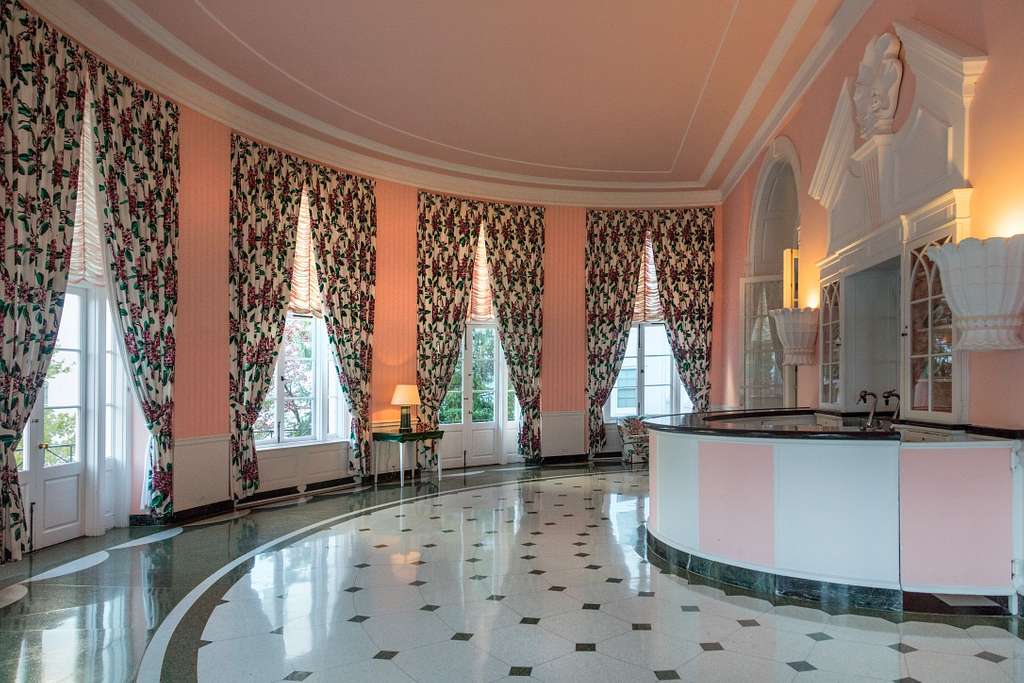
Hidden beneath the Greenbrier Resort in White Sulphur Springs, West Virginia, this bunker was built by the United States as an emergency Cold War relocation site for Congress.
According to The Greenbrier, Congress instructed the resort in 1958 to build the West Virginia Wing as cover for a fallout shelter and congressional relocation facility. Guests enjoyed the resort above while blast doors, dormitories, decontamination areas, and government workspaces waited below.
That’s the creepy part about this one. A luxury getaway doubled as a doomsday backup plan for lawmakers. The Smithsonian Magazine found that Project Greek Island was completed in 1962 and exposed in 1992.
2. Bunker-42, Moscow
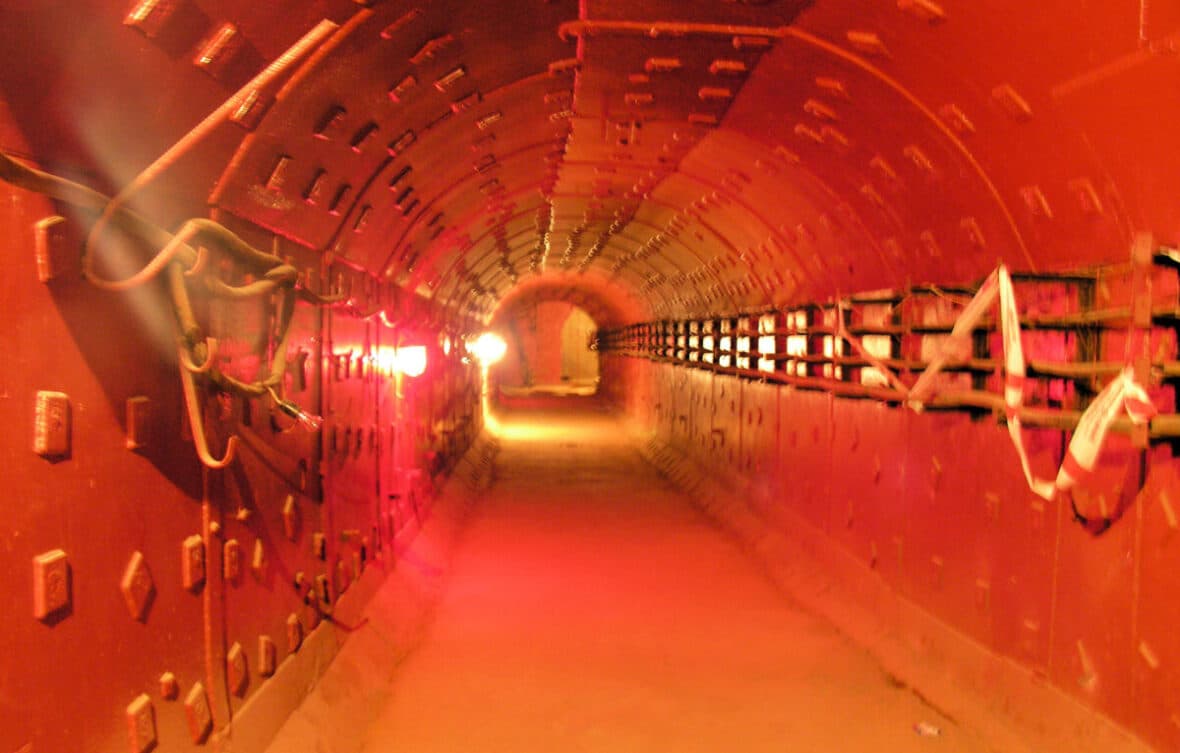
Bunker-42 sits about 65 meters under Moscow’s Tagansky District, built by the Soviet Union during the 1950s as a protected command site.
Bunker-42 explains how construction of the site began after the USSR studied nuclear weapon risks and decided leaders needed deep underground protection near the Kremlin. The creepy history is how normal city life kept moving above it. People walked streets, caught trains, and lived their lives while a nuclear command post sat beneath them.
The bunker had more than 1,000 transmitters and supported communications with aircraft and military networks. It now works as a museum, which gives the whole place a strange theme-park-of-the-apocalypse feeling.
3. The Green Mountain / Vis Submarine Pen, Yugoslavia (Croatia)
On the island of Vis in Croatia, the former Yugoslavia carved a submarine base into a hill. Croatia Yachting Charter states that Tito built the base because Vis was a strategic Yugoslav People’s Army site, and the submarine base was tucked into the hill so it couldn’t be seen from the air.
The strange history is that this quiet Adriatic island was once shaped by hidden military planning, with vessels able to slide into a concrete tunnel from the sea. You’d expect the beautiful scenery there, not a secret naval hideout built for Cold War concealment, and now one of many creepy Cold War bunkers.
4. Duga Radar “Woodpecker” Complex, Chernobyl Exclusion Zone
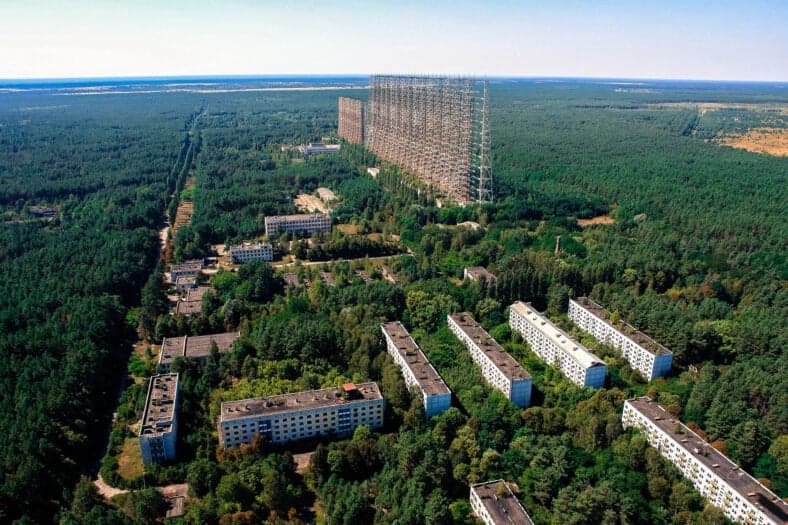
Near Chernobyl in Ukraine, the Soviet Union built the Duga radar system in the 1970s as part of an anti-ballistic missile early-warning network. Atlas Obscura highlights that the huge structure included antennas up to 150 meters high and 550 meters long, and that it broadcast a sharp tapping sound known as the “Russian Woodpecker.”
The strange history starts with that mystery signal, which disrupted radio communications around the world. Then Chernobyl changed everything in 1986. Now the site stands in the exclusion zone, surrounded by a landscape already tied to disaster.
Cold War paranoia, abandoned equipment, and radiation fears don’t exactly equal a fun day trip.
5. Teufelsberg Listening Station, Berlin
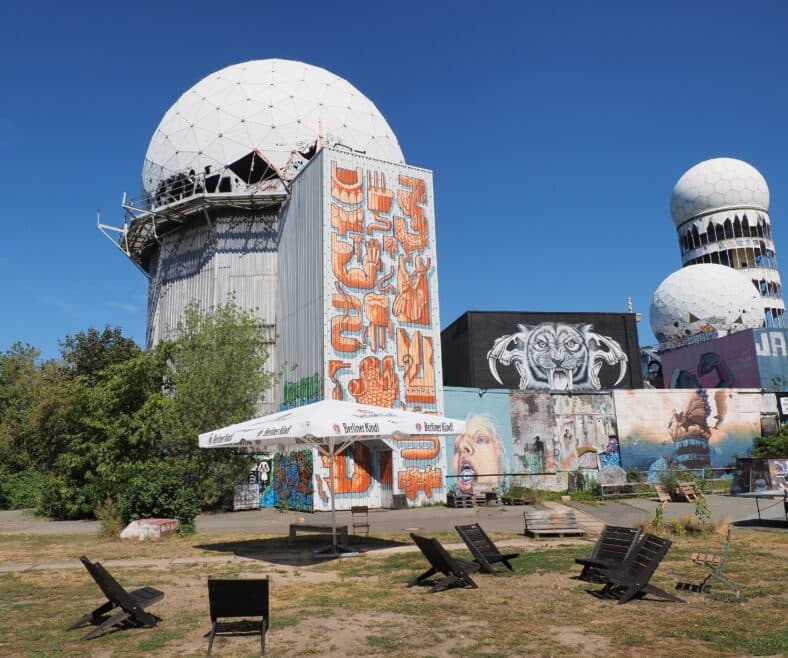
Teufelsberg in Berlin is a man-made hill built from World War II rubble, later used by the United States and its allies as a Cold War listening station.
Reuters reported that the hill also covers the remains of a Nazi military college that was too strong for British authorities to demolish after the war. That’s the strange history in one sentence: Nazis started it, rubble buried it, and then Cold War spies used it.
Visit Berlin states that American forces built antennas and radomes there to intercept signals from the Eastern Bloc. Today, the old radomes and graffiti-covered rooms look like a ruined sci-fi set; only the backstory is real.