
 Nikole Stewart

While Valentine’s Day is considered the most romantic holiday and features an abundance of chocolates, flowers, and expressions of love, you might not know much else about the holiday. With these weird facts about Valentine’s Day, you can learn a whole new side of the cherished holiday in February.
6. Rose Color Meaning
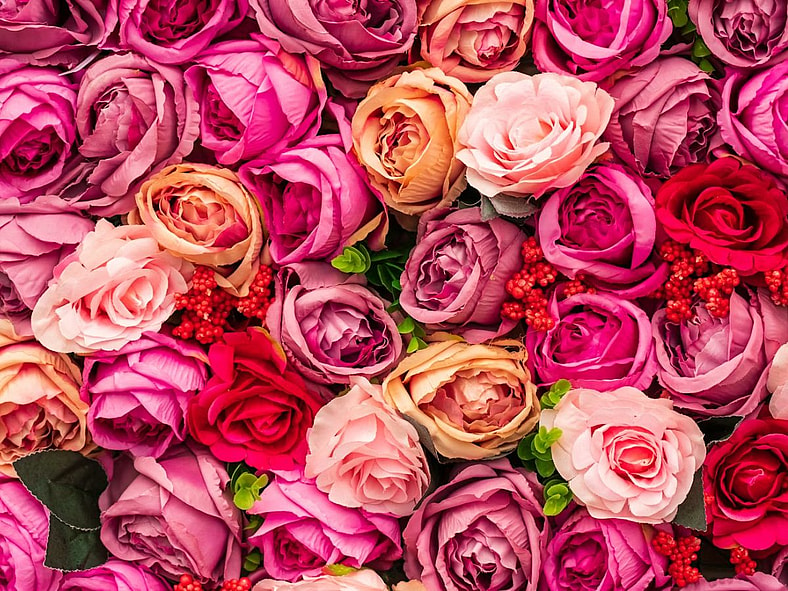
For most of us, we’re quickly stopping by our local store and grabbing whatever bouquet speaks to us for our loved ones. Many opt for roses, as it’s tradition on this holiday, but did you know that the color choice actually has meaning? One of the weird facts about Valentine’s Day involves the meaning behind rose colors.
Red, the most popular choice, signifies love, passion, and deep commitment. Pink symbolizes grace, sweetness, appreciation, and admiration. White revolves around purity, new beginnings, and honest love. Yellow is for friendship, joy, and positivity. Lavender is love at first sight, or being enchanted with the other person. And orange symbolizes excitement and desire.
5. XOXO’s Actual Meaning
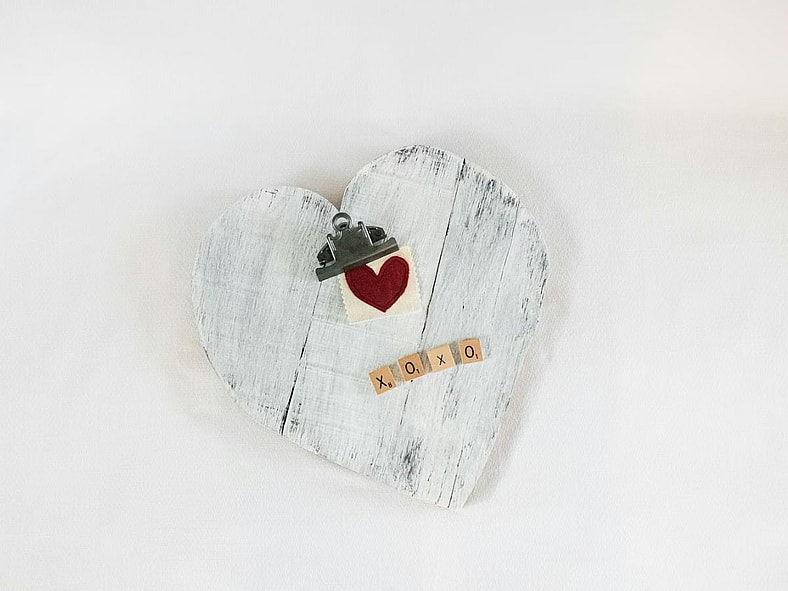
XOXO, the popular send-off in messages, and commonly used when writing Valentine’s cards and messages, doesn’t actually mean what we think it does. While XOXO is commonly used to express hugs and kisses, that’s not actually the real meaning. The Washington Post reported back in 2014 that the symbols stem from the Middle Ages, and the X symbolized the Christian cross, and letters ended with the sign of the cross and a kiss to symbolize an oath. Throughout the years, the symbols became more popular in literature, letters, and paperwork, and quickly became modernized to signify “sealed with a kiss” or hugs and kisses.
4. Vinegar Valentines

During this loving holiday, we send special Valentine’s to special people in our lives, whether it’s platonic or romantic. But back in the day, specifically the Victorian Era, vinegar valentine’s, also known as penny dreadfuls, were a common thing to send to someone. If you wanted to fend off unwanted suitors, you would anonymously send these, which were full of insults and rejections, rather than sweet sentiments.
3. Conversational Hearts Origin
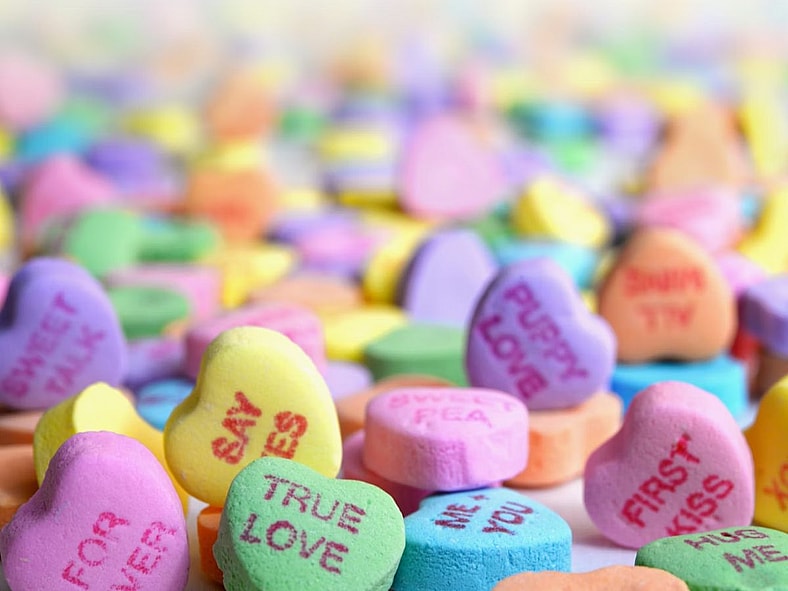
One of the most popular candies you see during Valentine’s Day is the conversation hearts with cute messages, motivational sayings, and more. But did you know the history behind these treats? One of the weird facts about Valentine’s Day is the origin of this candy. Back in 1847, Oliver Chase invented a machine to easily produce lozenges, which was medicine mixed with sugar paste. They were in high demand to help with sore throats and other ailments.
Chase eventually shifted his business from lozenges to candy, founding Chase and Company, which later became New England Confectionery Company, or Necco. The candy became what we know today as Necco wafers, and in 1866, Oliver’s brother, Daniel, devised a way to press words into the candies, which finally created the popular conversational hearts.
2. The Opposite of Valentine’s Day

Valentine’s Day isn’t for everyone. Some couples aren’t interesting, and some just don’t have a partner and would rather avoid the holiday altogether. If you’re the latter, then you’ll be excited to know that you have an official holiday. One of the best weird facts about Valentine’s Day is its opposite, Quirkyalone Day. The holiday is also on February 14, and it started in 2003. It’s quickly spread, with over 40 cities around the world holding parties in celebration. The holiday was made as a firm reminder to celebrate yourself, whether you’re in a relationship or not!
1. Origin of Valentine’s Day
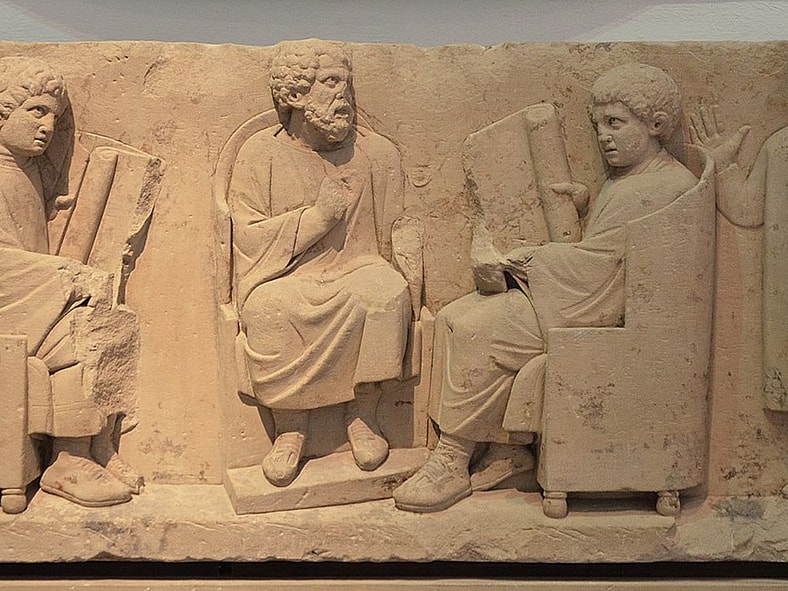
While not official, it’s speculated that Valentine’s Day has its roots in the ancient Roman festival known as Lupercalia. Observed on February 15, the holiday involved fertility rituals. It dates back to at least the sixth century BCE, and saw animal sacrifice and ritual whipping. All done to promote fertility, the holiday slowly turned into a day of romance with less dramatic and violent traditions.