
 Amelia Andriacco
Laws are an important staple in every country. They keep citizens safe, protect people’s property, and tackle issues before they happen. While some laws seem essential to certain countries, they are completely unheard of to citizens of other countries. Japan, in particular, has many strange laws that would definitely take some getting used to. Here are 7 weird laws in Japan from the past and present.
7. Car Owners Must Have Proof of Parking

When purchasing a car in any country, it is essential to get it registered before driving it. Authorities need to be able to identify your vehicle in case of theft or an emergency. However, in Japan, vehicle registration has a prerequisite of its own.
Due to the crowded cities, car owners must provide proof of a designated parking space. If the resident lives in an apartment, they must also prove that their parking space is within a reasonable distance from the building. If not, they are unable to register their vehicle.
6. Drunk Cycling

Driving under the influence is a law that likely everyone is familiar with. However, in Japan, this law extends to bike riders and is considered just as serious. The penalty for breaking this law is “imprisonment with work for not more than 3 years or a fine of not more than 500,000 yen.”
Similar penalties may also be extended to anyone aiding the offense. Providing a drunk person with a bicycle, providing alcohol, or riding as a passenger can all lead to imprisonment or fines.
5. Trash Separation

Unlike in many Western countries, where all your trash goes into one or two bins, Japanese garbage disposal laws are very strict. To maintain sufficient recycling, each household is expected to separate its trash into four main categories.
Primarily, trash is separated into burnable garbage, non-burnable garbage, recyclable garbage, and oversized garbage. Failure to properly separate your trash in Japan could result in trouble with landlords, neighbors, or even garbagemen leaving your trash behind.
4. Sumptuary Regulations

Many cultures throughout history have placed significance on social class. However, Japan had strict regulations about what clothes each class was allowed to wear.
During the Edo Period, commoners were not allowed to wear fine fabrics such as silk, even if they could afford it. This was largely to encourage frugal lifestyles among farmers and fishermen so they could produce as much food as possible.
3. Metabo Law

While the idea that it is illegal to be overweight in Japan is a bit of a stretch, there are obesity regulations in place. The law requires every citizen between the ages of 40 and 74 to have their waist measured. If you exceed the waist requirements, you are not punished, as many people believed. You are given support to help maintain a healthy lifestyle and avoid health issues before they arise.
While individuals are not punished for their waist measurements, companies are subject to a fine if too many employees fall outside of the required waist range. To combat this possibility, many companies introduce dietary education seminars or sports challenges to keep employees in good shape.
2. Tattoos in Hot Springs
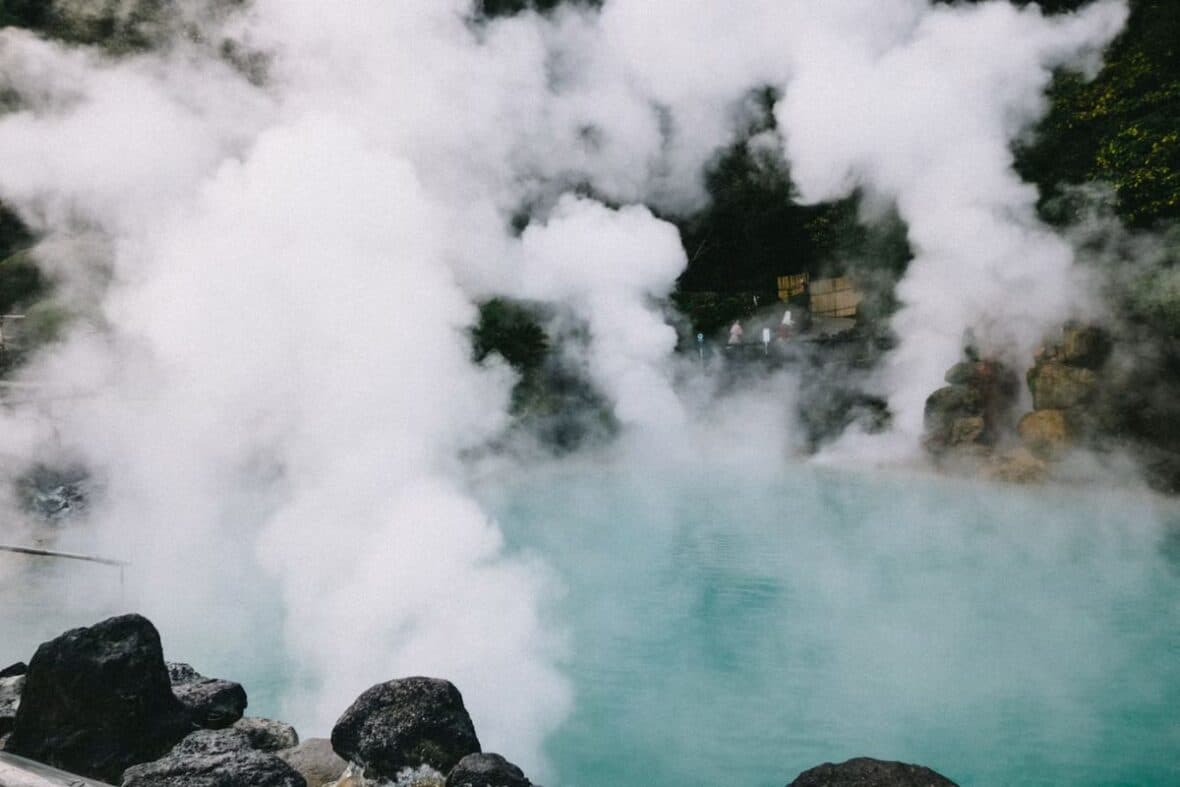
Although tattoos are generally allowed in Japan, hot springs typically do not allow visitors to have visible tattoos.
Members of the yakuza, or organized crime groups, were often given tattoos as a symbol of punishment. Later, many of these people got full-body tattoos to prove their commitment to the group. As a result, tattoos are often associated with crime and are therefore banned in traditional facilities.
1. No Dancing After Midnight

While this law is no longer in effect as of 2014, it existed for 67 years. The law was originally put in place in 1948 as a way of combatting prostitution, which was often associated with nightclubs. By getting rid of the dancing after midnight, Japanese lawmakers figured they could put a stop to other crimes taking place.
Many citizens felt the law was unfair as times were changing and petitioned for a modern approach to nightclub laws. After gathering 155,879 petition signatures, the law was finally relaxed.