
 Duane Beckett
America’s founding fathers were politicians, diplomats, inventors, and, at times, genuinely eccentric public figures. When digging into these historic figures, it shows a group that was far stranger, and far more human, than the marble-statue version most of us grew up with.
1. Jefferson had bears at his Washington home
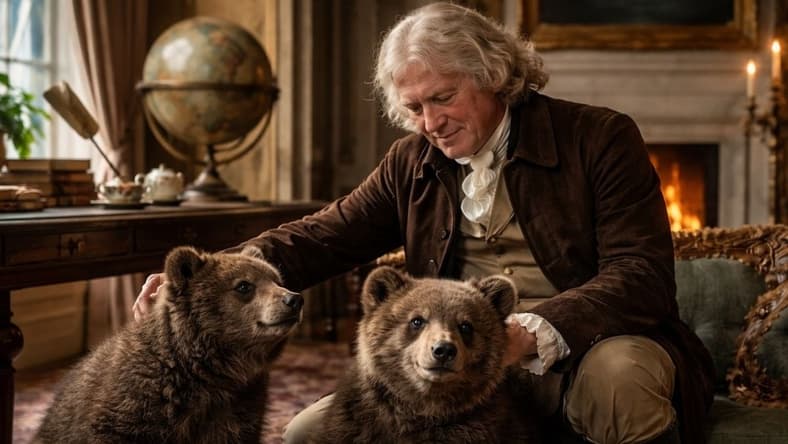
In 1807, explorer Zebulon Pike sent Thomas Jefferson a pair of grizzly bear cubs. Monticello notes Jefferson kept them for a short time at the President’s House in Washington, but he quickly admitted they were “too dangerous & troublesome” to keep and arranged to send them to Peale’s Museum in Philadelphia. I still love how odd that sounds, a president, a new nation, and actual grizzlies in the middle of it all.
2. Franklin had an issue with the bald eagle
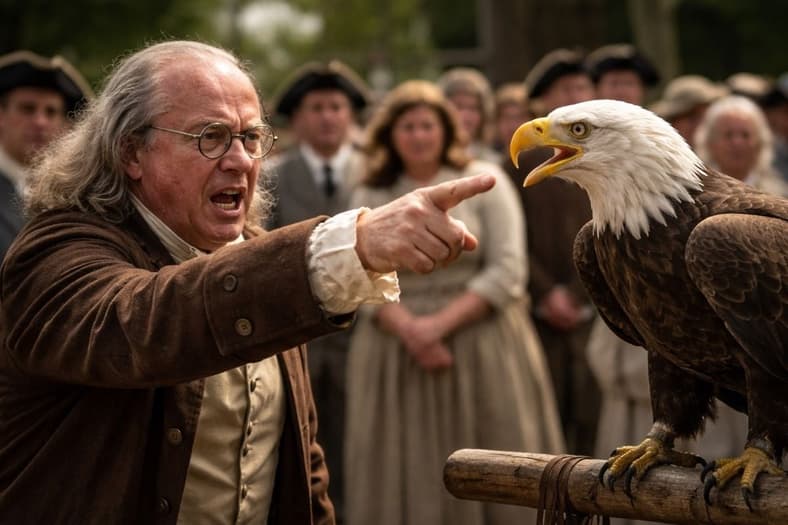
Benjamin Franklin’s bird debate is one of those stories that got flattened over time. The Franklin Institute says the popular version is a myth, because Franklin did not formally propose the turkey as America’s national bird. What he did do was rip into the bald eagle, calling it a bird “of bad moral character,” while praising the turkey as a more respectable native bird. That detail alone explains why the legend never really went away.
3. Franklin’s air bath
Another Benjamin Franklin detail that feels sitcom-level strange is his air bath years. In Franklin’s own writing, he described getting up early, sitting in his room with no clothes on for half an hour or more, and reading or writing in the cold air. He treated it like a healthy “tonic bath,” and clearly believed it worked better for him than cold water. Not exactly the image most people carry around from school textbooks.
4. Hamilton’s affair pamphlet
By 1797, Alexander Hamilton was in full damage-control mode, and it backfired in spectacular fashion. History reported that after facing accusations of financial corruption, Hamilton published a pamphlet laying out the details of his affair with Maria Reynolds, hoping to prove he was guilty of adultery, not embezzlement. Instead, the Reynolds Affair became what is widely described as America’s first major political sex scandal.
5. Two of the Founding Fathers died on the same day
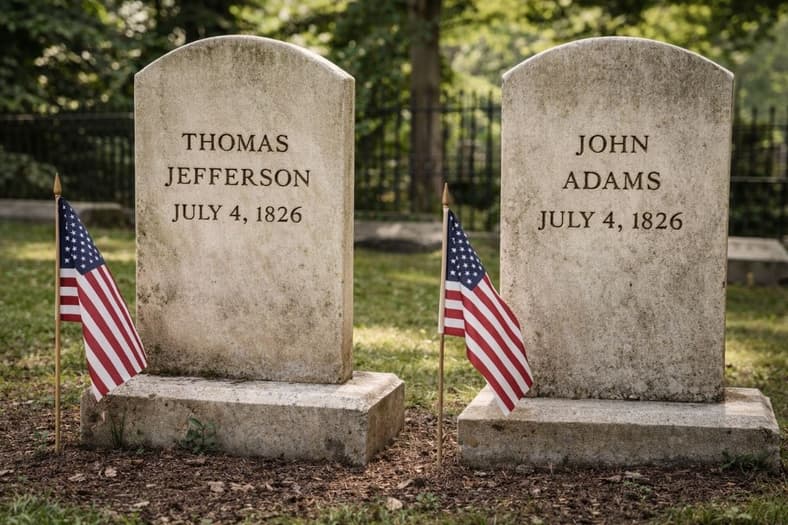
What always gets me about this one is how staged it sounds, like the kind of ending a screenwriter would be told to tone down. According to the Library of Congress, Thomas Jefferson died shortly after noon on July 4, 1826, and John Adams died several hours later, on the exact 50th anniversary of American independence. Monticello also notes they died within hours of each other, which still feels eerie nearly two centuries later.
6. They weren’t always known as the Founding Fathers
The phrase “Founding Fathers” wasn’t part of the Revolutionary era at all. The Journal of American History noted that historians trace the term to Warren G. Harding, who used it in a 1916 speech, long after Washington, Jefferson, Adams, and the rest were gone. So even the label we use today is a later invention, not something those men would have recognized in their own lifetimes.