
 Duane Beckett
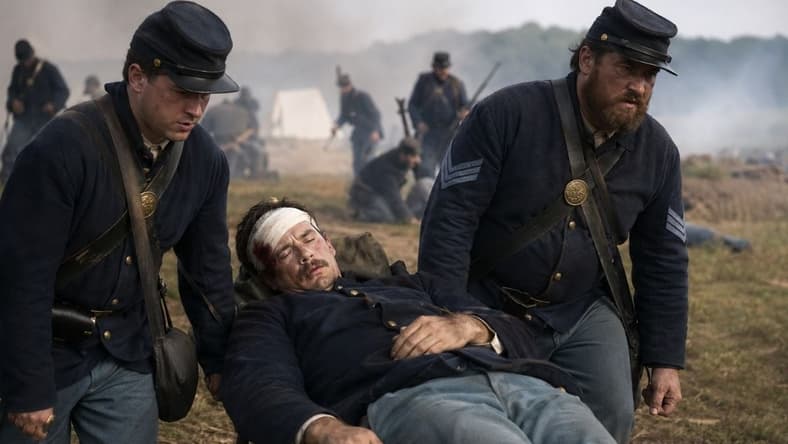
Civil War medicine was often harsh, rushed, and painfully limited. Doctors did not yet understand germs the way science does now. Yet, the war forced major changes in emergency care, surgery, infection control, and more. Each of which helped shape modern medicine.
1. A system for getting soldiers out fast
According to Wikipedia, Dr. Jonathan Letterman helped organize a new Union Army ambulance corps in 1862 after earlier systems failed to move wounded soldiers quickly enough. Before that, injured soldiers could be left on the battlefield for hours, or carried away by other soldiers who were needed in the fight.
Letterman’s system added trained ambulance crews, inspections, medical supplies, stretchers, and planned evacuation routes. It sounds basic by today’s expectations, but back then, it was a huge shift. That organized movement from battlefield to care helped form the model behind modern military evacuation and, later, civilian emergency medical services.
2. Normalizing pain control
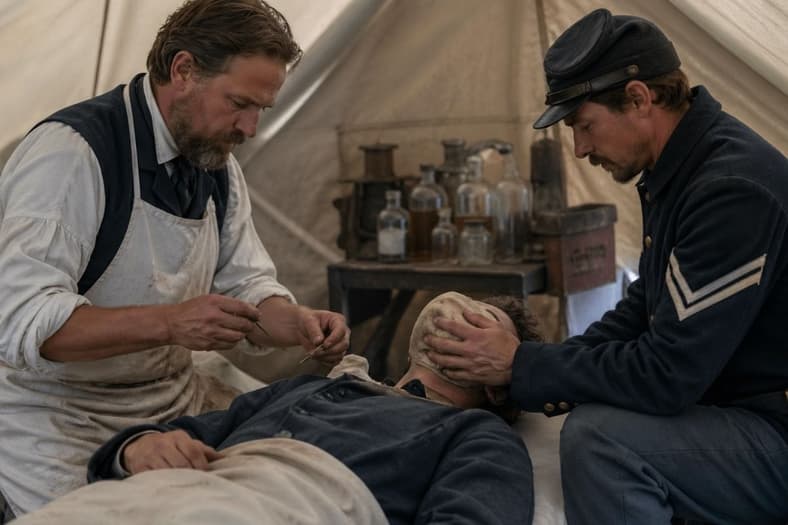
I always find this part eye-watering, because Civil War surgery is often remembered as pure horror. It was brutal, yes. But EBSCO highlights that anesthesia was widely available, with chloroform used in about 75% of Civil War operations through the open-drop method.
This worked by placing a cloth soaked in chloroform over the patient’s mouth and nose to make them unconscious. It’s far from perfect medicine and a long way from today’s standards, yet it proved that pain control could be used on a massive scale during surgery. This simple action helped move anesthesia from a newer idea into a regular part of medical care.
3. Faces rebuilt after battle
One of the most striking cases involved Union private Carlton Burgan, whose face was damaged after gangrene destroyed part of his cheekbone. Buck used dental and facial implants to help rebuild the shape of Burgan’s face.
Stories like this may feel futuristic for that time in history, but it’s also deeply human. These early reconstruction efforts helped point medicine toward modern plastic and facial surgery.
4. Who gets care first?
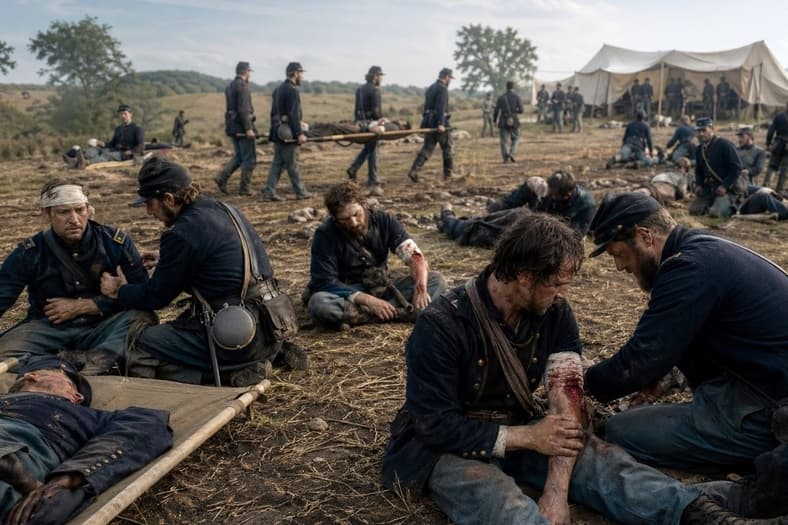
At a packed aid station after a battle, doctors had to make fast choices. Some soldiers needed a bandage, others needed surgery. EBSCO states that Civil War care developed into a three-stage system, with patients taken first to a triage area, then to a field hospital, and finally to a hospital away from the battlefield for longer care.
Today, emergency rooms, disaster teams, and battlefield medics still sort patients by urgency. These hard choices, all of which are made under pressure, became a lasting medical system.
The Smithsonian Magazine reported that the Civil War helped push the development of plastic surgery, including work by New York surgeon Gurdon Buck.
5. Infection control takes shape
Information from Reilly’s review of Civil War medical care shows that doctors used quarantine to help control yellow fever and treated hospital gangrene with bromine and isolation. This was a major change because infection was one of the great killers of the war.
EBSCO also state that doctors often worked in filthy conditions, sometimes without washing hands or cleaning instruments properly. It’s grim stuff that led to important lessons.
Separating contagious patients, limiting the spread of disease, and using chemical treatment against infection all foreshadowed later antiseptic and infection-control practices that are now standard in hospitals.