
 Amelia Andriacco
We are used to seeing curses within our favorite movies and books. They make a great story that leaves people on the edge of their seats. For many people of the past, these curses were not a form of entertainment but a real threat. Here are 7 ancient curses people once believed were real.
7. The Curse Of Koh-i-Noor
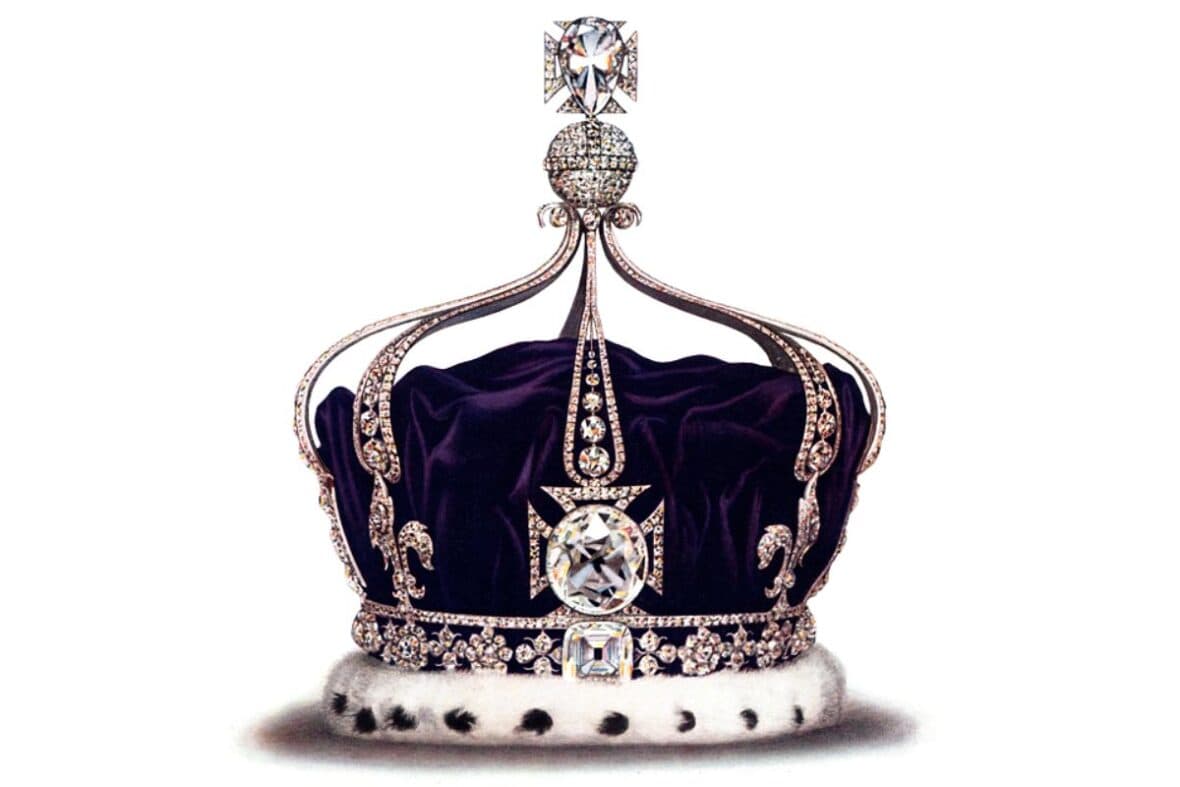
The Koh-i-Noor is currently one of 2,800 British Crown Jewels displayed at the tower of London. It is known as one of the largest cut diamonds in the world, weighing in at 105.6 carats. The British took possession of the diamond in 1849, but the jewel’s history runs much deeper than that.
The diamond was mined centuries earlier in India. It became highly sought after, leading to violence and war. With every region that took possession of the jewel, there was assassination, theft, and conflict. Due to the dark history of the diamond and the male leaders who fought over it, the jewel is said to be cursed.
While it is cursed, it is said to only bring misfortune to male rulers. As a result, the diamond has only been worn in women’s crown within the British monarchy
6. Ötzi The Iceman Mummy Curse
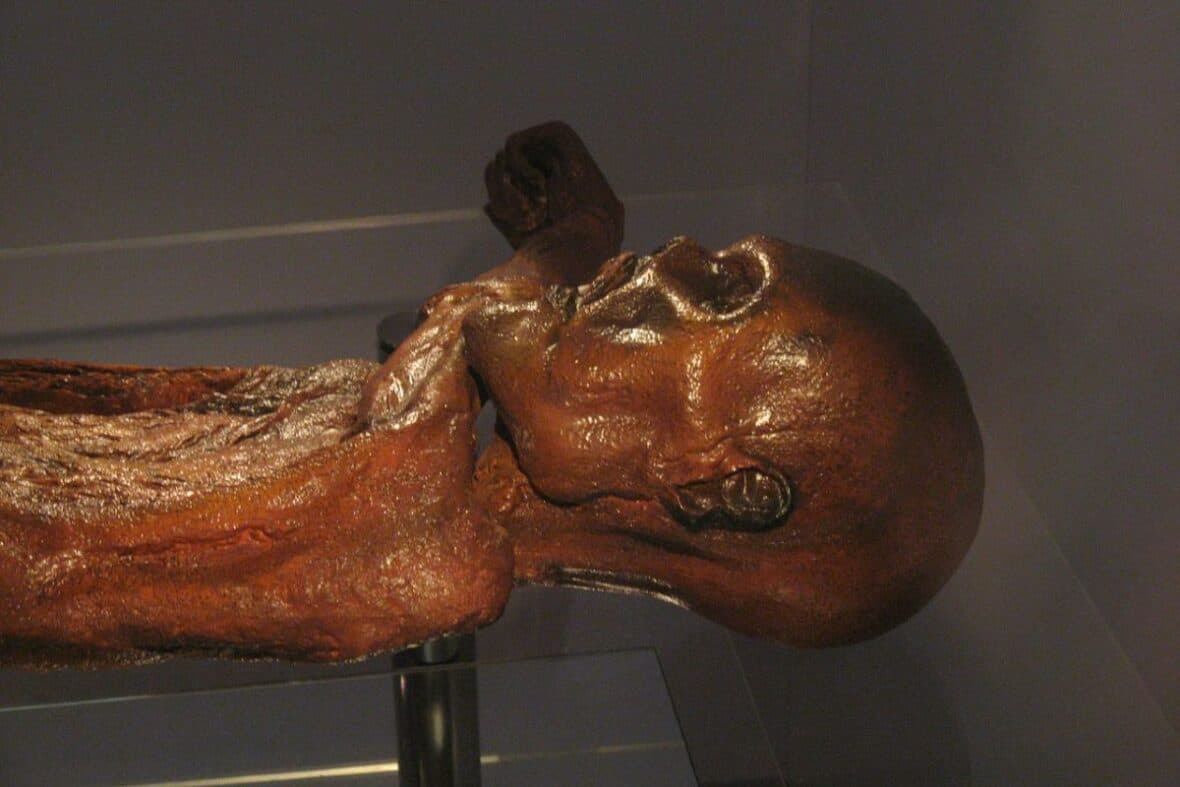
Ötzi lived over 5,000 years ago during 3300 BC. His frozen body was discovered in 1991–perfectly preserved. This was a groundbreaking discovery, as it provided previously unknown context to how they lived, dressed, ate, and more. The body was discovered with a copper ax, a bow and arrow, tools, clothing, medicinal plants, and tattoos.
Ötzi’s body also showed evidence of a violent death–with an arrowhead lodged in his shoulder and signs of head trauma. Legend has it that Ötzi ensured others faced the same fate.
There are reportedly seven tragic deaths associated with people who were involved with the discovery, study of, or restoration of the body. Some of these included dying in an avalanche, a car accident, and a heart attack. While some see these deaths as coincidence, other’s saw it as Ötzi exacting his revenge for disturbing his peace.
5. House of Atreus Curse
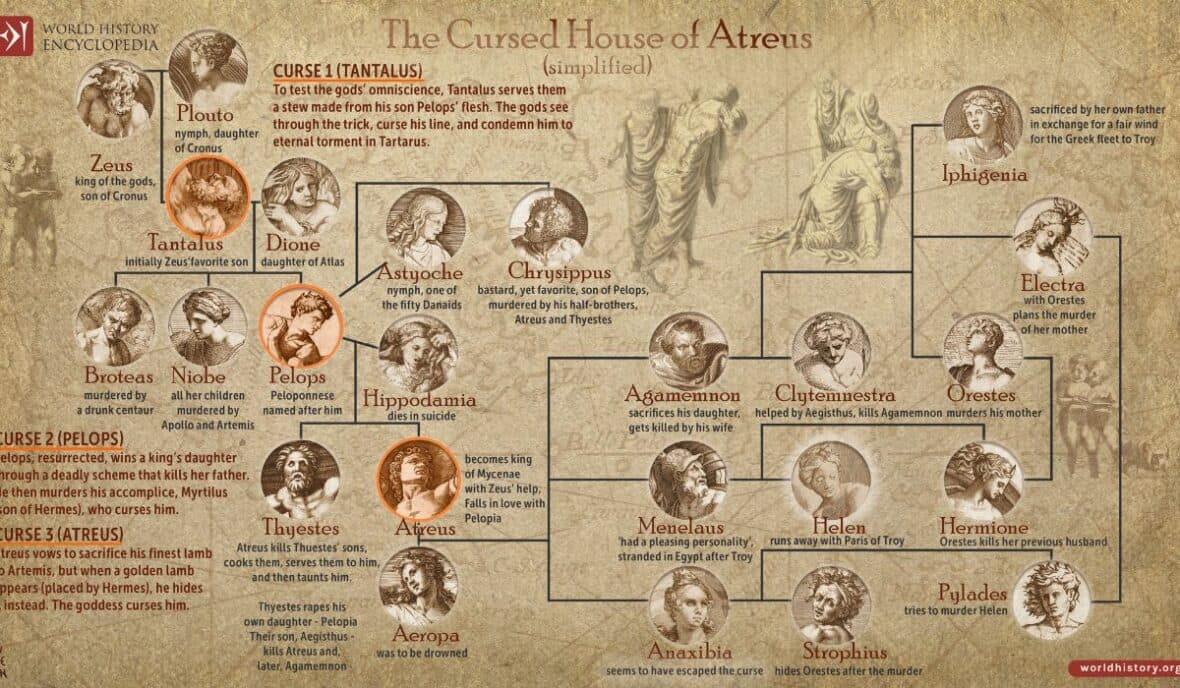
While many members of the House of Atreus did nothing to earn a cursed life, their ancestor did.
The ancient curse started with Atreus, the King of Mycenae, and his brother, Thyestes. After Thyestes betrayed his brother by seducing his wife in attempts to steal the throne, Atreus responded in an unthinkable way. He exacted his revenge by cooking Thyestes’s sons and feeding them to him. Greek writers view this as the moment he crossed a moral boundary that could never be uncrossed.
Their decedents continued a legacy of violence and revenge, cursing the whole family. In Greek mythology, this is seen as a warning against endless retaliation. It can lead to a cursed bloodline with no hope for relief.
4. The Curse of Croesus’s Treasure
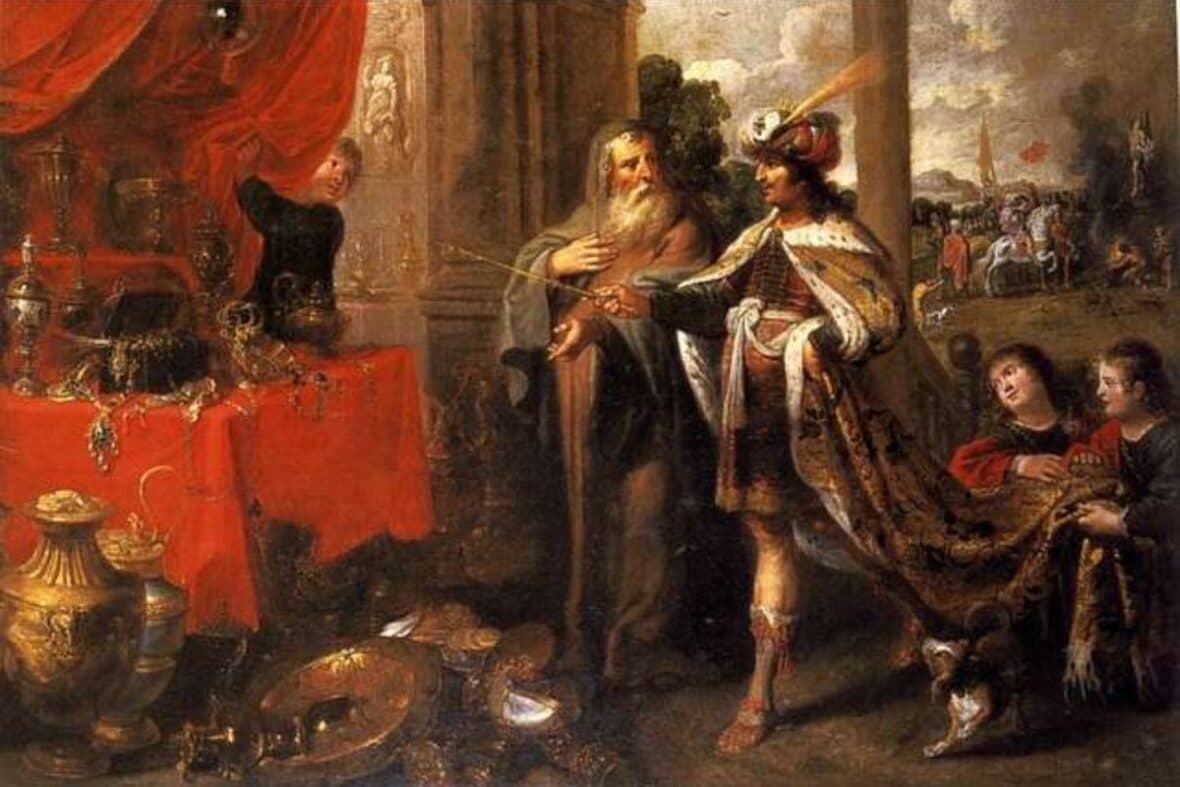
This ancient curse warns people against the dangers of theft. Even if legal actions are not taken against the perpetrator, they might be in for something much worse.
The Treasure of Croesus consists of artifacts from the Lydian Kingdom under the rule of King Croceus between 560 and 547 B.C. Some of this treasure–in the form of jewelry–was buried with the Lydian princess. Upon its discovery in 1965, villagers stole the jewelry from her, along with the other treasure that was discovered.
The villagers illegally sold the treasure to a smuggler. After that day, their lives were filled with misfortune and misery. The treasure was said to be cursed from that day on.
3. The Curse of Cassandra

In Greek Mythology, Cassandra was known as the beautiful daughter of Priam. She had many suitors competing for her hand. One of these suitors was Apollo, the Greek god of prophecies.
During his pursuit of Cassandra, he offered her prophetic abilities in exchange for accepting his romantic advances. She agreed, but later refused him after he held up his end of the deal.
Instead of taking stripping her of her ability, he placed a curse upon her. All of her prophecies would be ignored, making her entirely powerless over the fate of her people. She would watch as the terrible events she predicted would unfold, yet she was unable to do anything about it.
The most famous result of her cursed ability is the Trojan Horse. She warned her people about the men hiding inside, but no one believed her. This ultimately resulted in the fall of Troy.
2. Andvaranaut
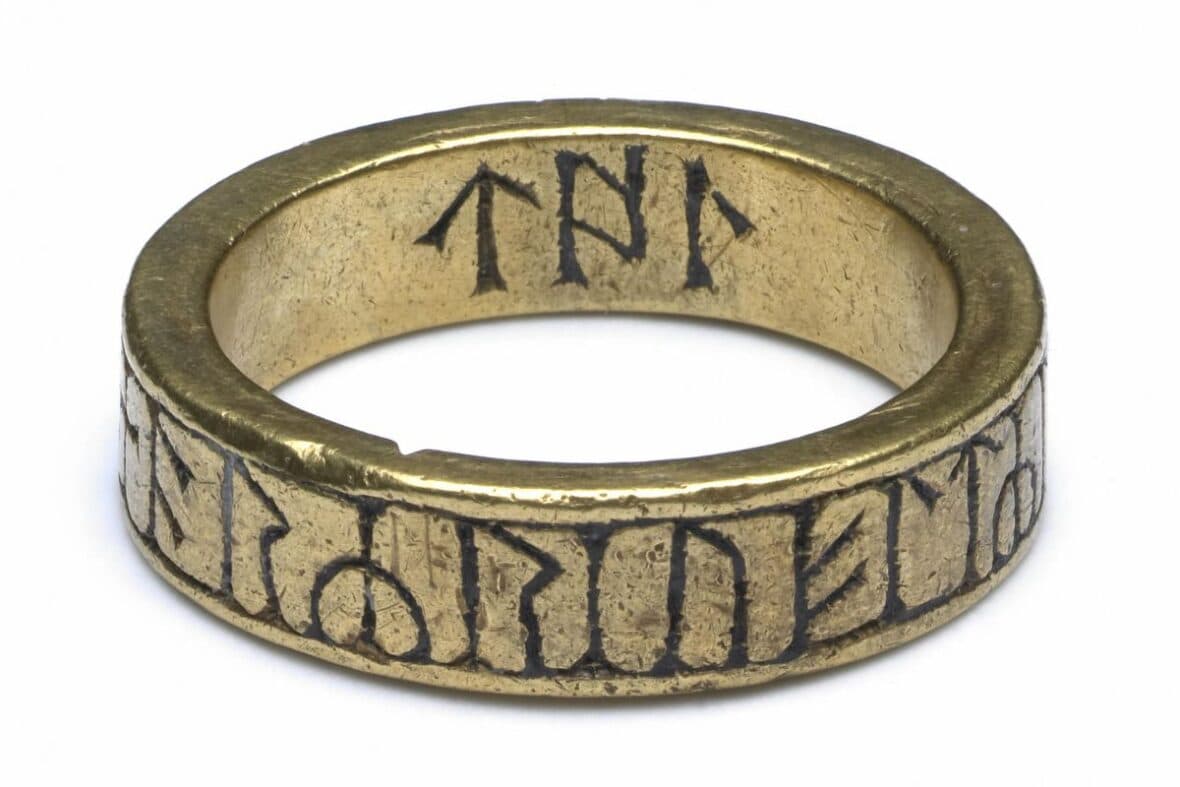
In Norse tradition, there was once a dwarf named Andvari who had a large sum of treasure. After losing his treasure to Loki under coercion, he placed a powerful curse on the ring known as Andvaranaut.
The ring is said to represent greed and ambition, bringing the owner conflict rather than fortune. As time went on, many owners of the famous ring suffered loss and death.
One story follows a man name Sigurd who won the ring and bestowed it upon his wife Gudrun. While Sigurd lost his life (allegedly as a result of the cursed ring), Gudrun was tricked into marrying a horrible man named Atli. She carved ruined into the ring and sent it to her brothers a warning to stay away, but they traveled to Alti’s land anyway, resulting in their death.
1. The Curse of Erysichthon
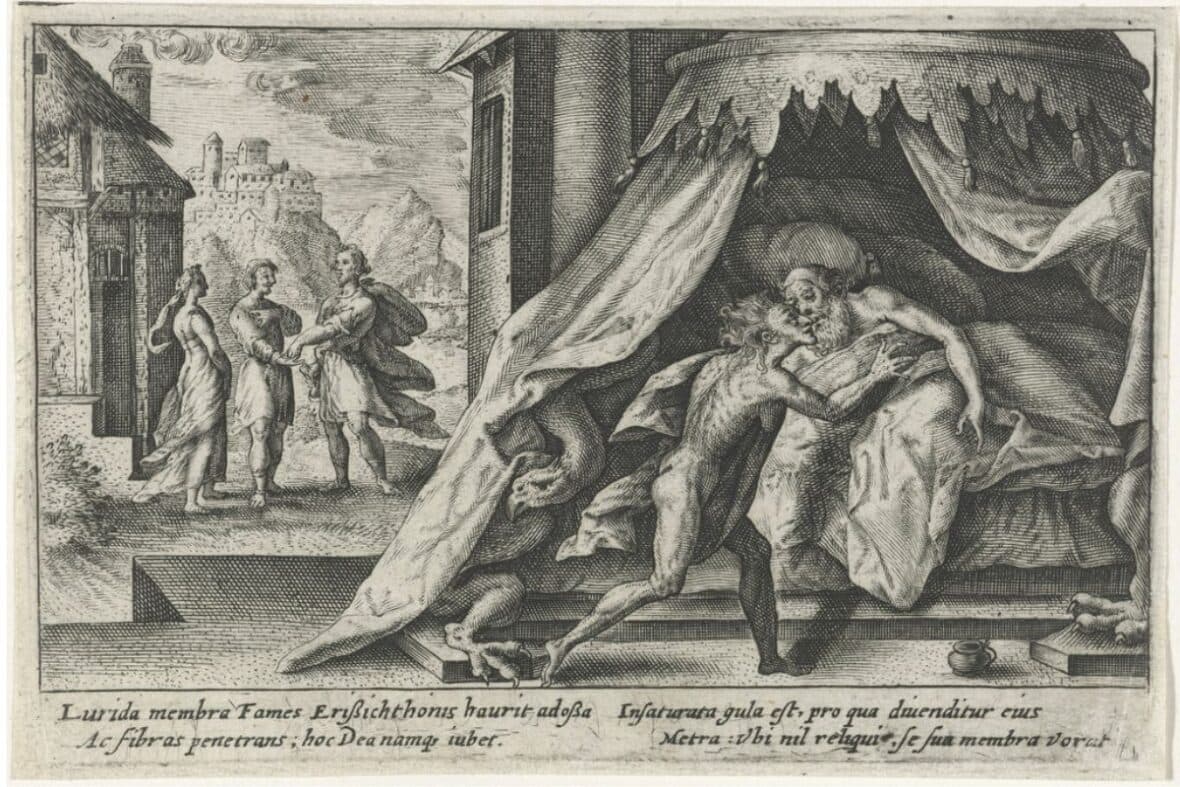
Erysichthon was a Thessalian king who was known to be greedy. He always wanted to expand his property, so he turned to an ancient grove of trees for wood to build a grand dining hall. These trees were sacred to the goddess Demeter. At the center of the grove stood a particularly grand oat tree.
After his servents refused to cut the tree down, Erysichton used the ax himself. Demeter was so angered by this that she placed a curse upon him. Erysichton would be insatiably hungry for as long as he lived. Every meal would only add to his hunger so he would never be satisfied.
In the end, Erysichton spent all his riches on food and sold his daughter into slavery to buy more. He was alone and hungry, which led him to devour himself.