
 Duane Beckett
American laws haven’t always arrived in a neat or planned way. Sometimes, one added word, one public scare, or one dull record-keeping rule changes the nation for generations. These six examples started with narrow goals, then grew into systems that touched almost everyone.
One word changes Civil Rights law
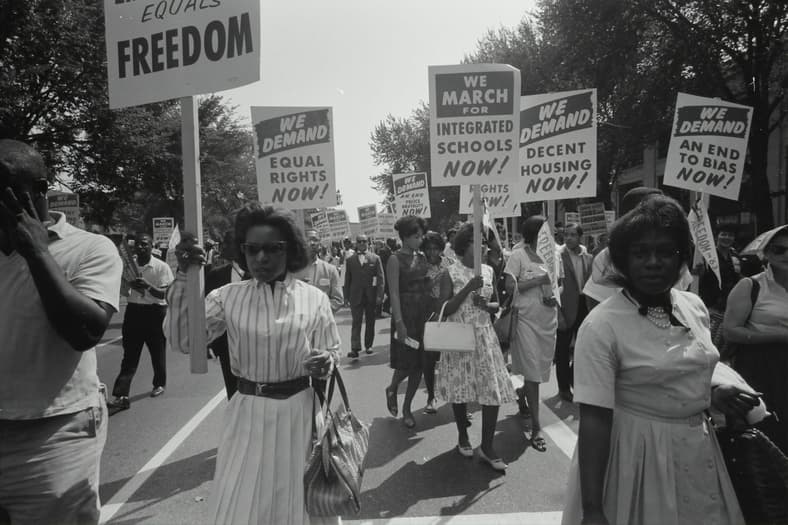
Title VII of the Civil Rights Act of 1964 banned job discrimination based on race, color, religion, national origin, and sex. Rep. Howard Smith of Virginia added “sex” during the debate, and the move was mocked by some on the House floor.
According to the National Archives, Smith thought the addition might help kill the bill, but the word stayed. Rep. Martha Griffiths and Sen. Margaret Chase Smith later helped keep it in place when a conference committee tried to remove it.
A food law born from a stomach-turning novel
Upton Sinclair wrote The Jungle to expose brutal labor conditions in Chicago’s meatpacking industry. However, readers were more alarmed by something else: the spoiled meat and filthy factories.
The FDA states that Sinclair’s book became the “final precipitating force” behind both the meat inspection law and a broader food and drug law. The U.S. Capitol Visitor Center also says public outrage over food adulteration and unsanitary meat production helped push Congress to act.
A bookkeeping number becomes an identity

In 1936, social security numbers were meant to track workers’ earnings for retirement benefits. It wasn’t started for banking, healthcare, or school records. Nor was it meant to be on every form you’ve filled out since disco was still on the radio.
NPR reported that because names were too common and fingerprints felt too criminal, the nine-digit number became the answer. Over time, it slipped into taxes, loans, medical files, and government records. Accidentally, America got a national ID system without calling it one.
RICO goes far beyond its original target
The RICO Act was signed in 1970 to fight organized crime, especially the infiltration of legitimate businesses.
The Justice Department says RICO’s purpose was to eliminate organized crime and racketeering inside legitimate organizations, but it also states the statute is broad enough to cover illegal activity tied to any qualifying enterprise.
Britannica adds that the Supreme Court later concluded RICO was not limited to organized crime and could apply to legitimate commercial businesses.
Phantom children disappear from tax returns

The Tax Reform Act of 1986 added a small rule with a quite shocking result. Parents had to list Social Security numbers for dependent children age 5 or older on tax returns. The goal was to stop bogus dependent claims.
According to the Social Security Administration, the new requirement doubled SSA’s enumeration workload the next year. Deseret News reported that taxpayers claimed 7 million fewer dependents than projected on 1987 returns, producing an extra $2.8 billion in federal income taxes.
ZIP codes become data gold
ZIP codes were launched in 1963 to help the U.S. Post Office sort and deliver mail faster. The JFK Library Archives states that the five-digit ZIP code plan was announced in 1962 and implemented on July 1, 1963, helping organize mail by region, sub-region, post office, and delivery station.
The USPS Office of Inspector General later found that ZIP codes created “unimagined socio-economic benefits” and became useful to industries such as insurance and real estate. Something built to move letters became one of America’s most powerful data labels.