
 Duane Beckett
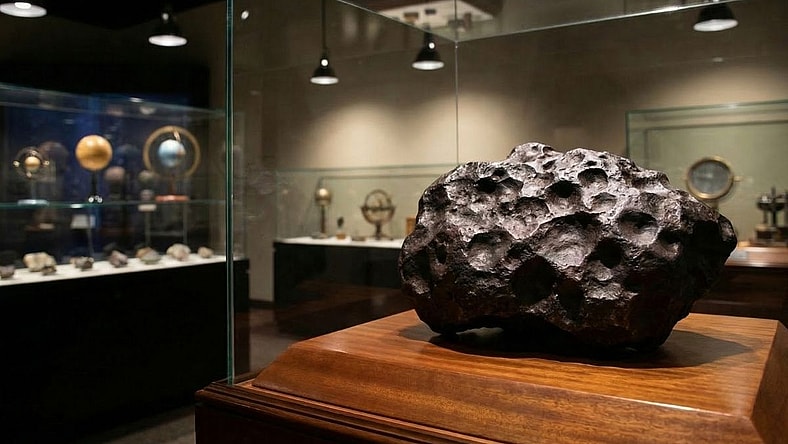
Big, bold, and rare meteorites have breached from science curiosities, and become serious collector pieces. Whether it be the rarity, the allure of holding something from space, or growing auction-house pushed, interest (and price) is up.
However, before you rush to eBay, there is a catch. The meteorites with truly astronomical value are from Mars or the Moon.
Meteorites have been available to buy for ages, so why the big surge in recent years? According to the world-famous auction house Christie’s, the rarity of these items is quite spectacular. For instance:
- The total known weight of meteorites is smaller than the world’s annual gold output.
- From that limited amount, only a few hundred known specimens actually come from the Moon or Mars.
As we always say on Nerdable, rarity and scarcity drive value.
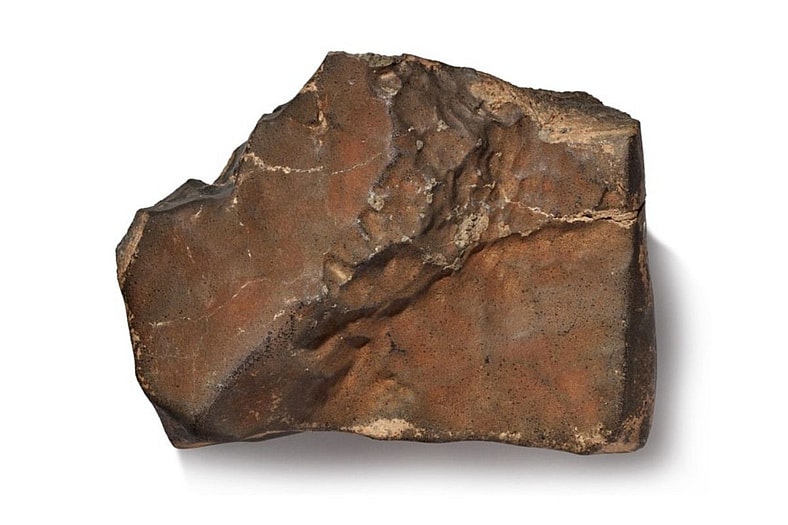
The clearest proof of this newfound collectible fame (and fortune) came in July 2025, when Sotheby’s sold NWA 16788, the largest known piece of Mars on Earth, for $5.3 million (with fees and taxes added).
For clarity, NWA 16788 is a 54-pound meteorite that sparked a 15-minute bidding battle and not something you’ll find in your local yard sale.
Regardless, Reuters reported that only about 400 officially recognized Martian meteorites exist. Sotheby’s says the rock accounts for roughly 6.5% of all known Martian material on Earth.
All this showcases why NWA 16788 sold for such a huge sum.
What makes a space rock worth millions?
As a collector of oddities and rarities, I get the appeal.
For a collector, a meteorite of such rarity is the kind of object that feels half museum piece, half childhood dream. The big-ticket price is likely part sci-fi romance for the buyer, but that isn’t the whole story.
In Sotheby’s coverage, linked previously, value rises with rarity, weight, scientific interest, known origin, fusion crust, aesthetics, and even whether a meteorite has been cut into a dramatic slice or shaped into a sphere.
The Natural History Museum in London also points out that Martian meteorites matter scientifically because they are still one of the few direct ways researchers can study Mars without a sample-return mission putting fresh material in hand.
Not every fragment is a jackpot
As mentioned at the start of the article, not all otherworldly rocks are worth huge sums. The marketplace is varied.

Christie’s past auctions show that their 2022 meteorite sale earned $1.2 million, while the 2023 sale earned just under $1 million.
What’s interesting is that their lots ranged in value from $400 to several thousands. When you see variety in prices, you know that the market has a number of collectors, and isn’t driven by a few millionaires looking for something to show-off.
All of this points to active buyers across the world. Yet, the market is picky. For example, Heritage’s current listings show plenty of lunar and Martian pieces estimated in the low thousands. So, clearly not every Moon or Mars rock is worth millions.