
 Duane Beckett
Vietnam War tactics often looked modern because the tools were modern. Helicopters, napalm, radio broadcasts, psyops, and fire bases. Yet the ideas underneath these are very old. In many cases, the war reused the battlefield thinking that ancient commanders would have recognized fast.
Attrition warfare
Tactic: Kill enemy forces faster than they can be replaced, instead of focusing only on taking land.
According to Britannica, Gen. William Westmoreland pursued a war of attrition in Vietnam, with enemy body count used as a key measure of progress. That feels very 20th century, but the idea is ancient.
Rome understood long, grinding wars. So did Carthage. The goal was simple and brutal, make the other side run out of soldiers, supplies, will, or time. Clausewitz later gave this kind of thinking a formal military shape, but the bones of it were already old.
Napalm’s link to Greek fire
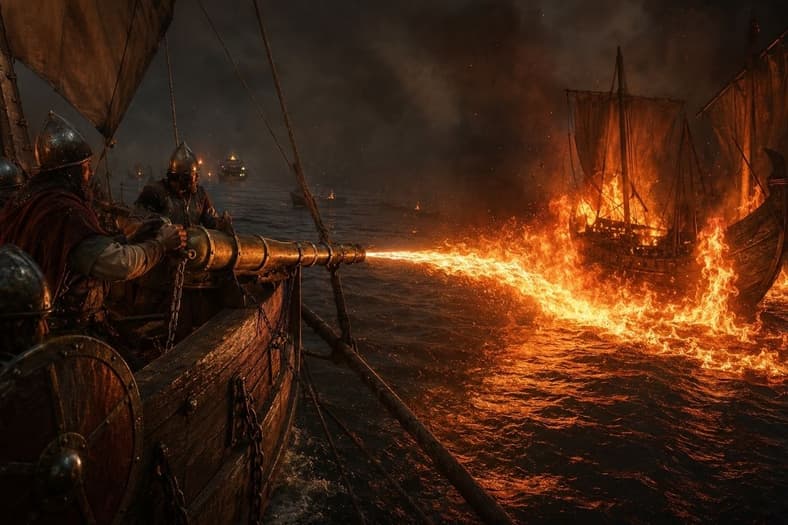
Tactic: Use fire to destroy cover, bunkers, supply routes, and enemy morale.
Prospect reported that about 388,000 tons of napalm fell on Vietnam between 1963 and 1973. This tactic goes back to flaming arrows, burning pitch, and Greek fire, the Byzantine incendiary weapon that stuck to targets and burned with terrifying force.
HistoryExtra states that Greek fire could be hurled in pots or fired through tubes. Different century, different delivery system, same principle. Fire was used to force people out, deny safety, and make a battlefield feel inescapable.
Defoliation and scorched earth
Tactic: Remove jungle cover and destroy crops so enemy forces lose shelter, food, and movement.
Information from the National Academies Press shows roughly 20 million gallons of herbicides were used in Vietnam from 1962 to 1971. Operation Ranch Hand was the famous piece of that story.
The ancient warrior link is scorched earth. The Scythians used it against Darius the Great, retreating while destroying food supplies and poisoning wells, so the Persian army had less to live on. In Vietnam, that same logic came from aircraft and chemicals.
Forts inside hostile ground
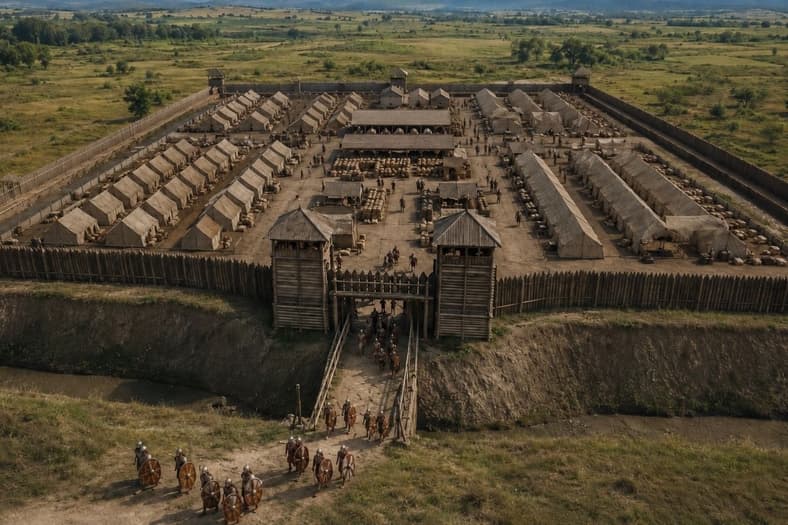
Tactic: Build fortified outposts in contested territory, then use them to support patrols and attacks.
The U.S. Army Heritage Trail reports that Vietnam fire support bases used howitzers behind berms and barbed wire, with bunkers and guard towers inside the compound. That setup has a very old ancestor.
Roman castra were fortified military camps, built with ditches, ramparts, palisades, gates, and a planned interior layout. UNRV states that castra gave Roman legions secure bases to rest, regroup, and plan operations. Fire bases weren’t Roman camps with helicopters, of course. But the idea matched, carry the fort with you.
Snipers and the precision marksman
Tactic: Use trained marksmen to remove key targets, slow movement, and create fear.
American Rifleman found that many Vietnam snipers came from hunting and long-range shooting backgrounds, while VA News reports Carlos Hathcock became a sniper after first serving as a military policeman in Vietnam.
The ancient line runs through archers and crossbowmen, especially in armies that valued skilled shooters over mass volleys alone. Chinese crossbows appear in history by around the 7th century BC, giving ancient commanders a way to place aimed force at distance.
Fighting inside the enemy’s head
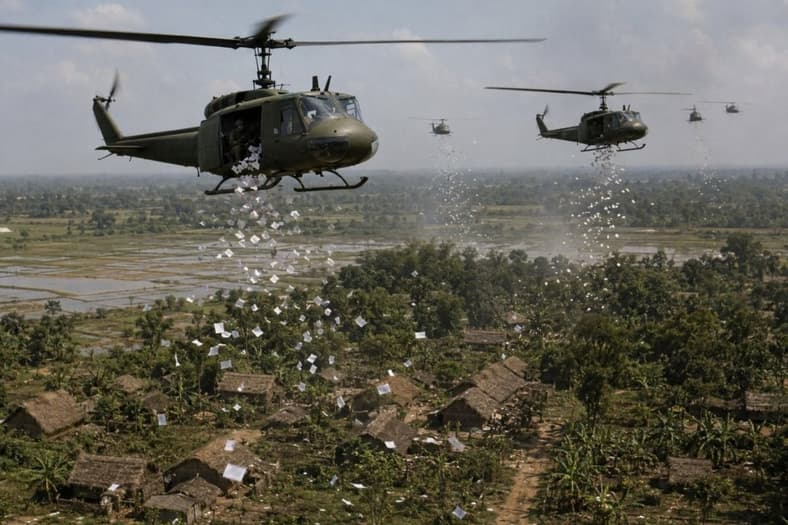
Tactic: Use leaflets, radio, loudspeakers, and imagery to weaken morale or encourage surrender.
Britannica states that psychological warfare is ancient, with Cyrus the Great, Xerxes, Philip II, and Genghis Khan all using fear, rumor, or influence as weapons. Vietnam gave that old idea modern tools.
PsyWarrior reports U.S. leaflet drops and loudspeaker missions, including hundreds of millions of leaflets in some campaigns. Some messages promised safety. Others tried to make soldiers feel isolated or doomed.
As a pop culture guy, I think of how sound and image can change a mood fast. In war, that power clearly becomes much darker.